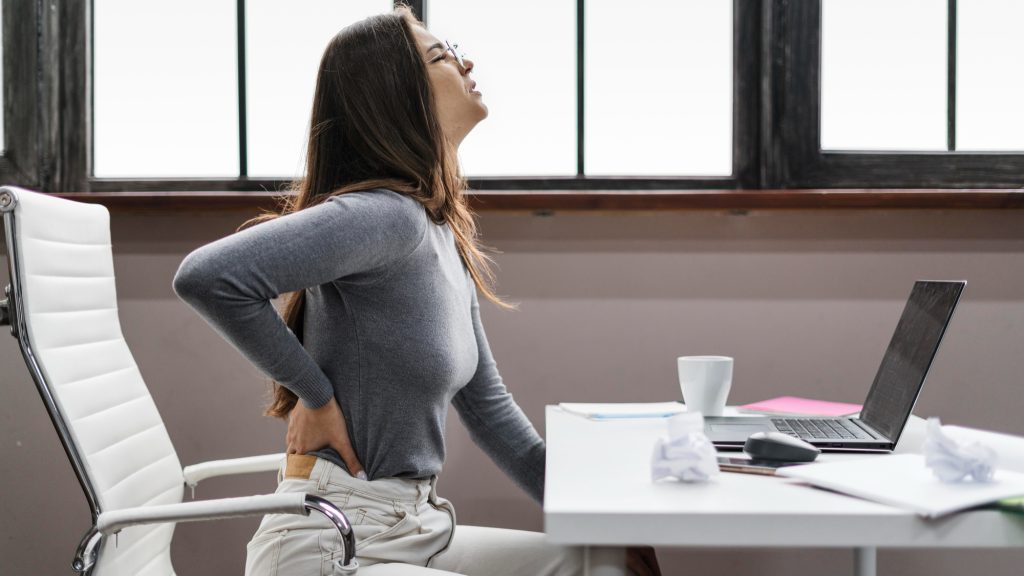
One of the most common complaints our team sees is back pain. When you visit Anniston Chiropractic in Anniston, we’ll talk to you about any pain you have and, in nearly all cases, we can offer treatment that helps to reduce your pain and improves your quality of life. If you suffer from back pain in Anniston, contact our team for an appointment.
Book OnlineWhat Causes Back Pain?
Back pain occurs for many reasons, and with each patient’s experience is unique, we take the time to find the source of your back pain. If you have pain in the muscles or joints of your back or pain that seems to radiate outward from your spinal column, our team can help you. Some of the most common causes of back pain include:
- Muscle strain or ligament sprain, such as lifting something too heavy or overstretching and tearing of the ligaments
- Poor posture
- Sports injuries including those related to twisting
- Pinched nerves including for pain that radiates into the hips and legs
- Degenerative disc disease or disc dysfunction
- Trauma
If you have pain, don’t wait to seek out the help you need. Our treatment options do not require the use of pain medications or surgical procedures.
How Can Your Anniston Chiropractor Help with Back Pain Relief?
When you experience back pain, you may expect the pain to fade over time. However, the underlying cause of your pain remains in place, limiting your body’s ability to fully recover from the pain at any given time. We can offer back pain relief because we treat the underlying cause of your pain.
- Chiropractic Care – One of the ways we can treat back pain is through the use of chiropractic care. Spinal adjustments properly align the spinal column, reducing the pressure on the nerves and muscles in the back. This reduces inflammation and pain.
- Spinal Decompression – For those suffering from any type of disc-related injury or disease, our team will work to reduce that pain using spinal decompression. This treatment works to reduce the amount of compression, or pressure, on the discs, reducing pain.
- Massage Therapy – Massage therapy can help reduce the inflammation in the joints and muscles. This can help speed up the healing of the body and aid in stimulating relaxation.
Customized Care for Back Pain from Our Physical Therapist in Anniston
We may also recommend care for the underlying problem such as correction of poor posture. If you’ve suffered an injury, we may recommend physical therapy. Weight loss may help to encourage reduced back pain as well. Our goal is to help you find back pain relief based on the cause of your discomfort, healing it at the source. If you have back pain in Anniston, our team is available to help.
Lower-Back Pain Frequently Asked Questions
What commonly causes lower-back pain?
Lower-back pain can have many possible causes, including muscle or ligament strain, prolonged sitting, repetitive activities, joint irritation, injuries, age-related changes, and conditions involving spinal discs or nerves. Because different problems can produce similar symptoms, an appropriate evaluation can help identify factors that may be contributing to your pain and guide recommendations for care.
Why does my lower back hurt after sitting?
Sitting for long periods can place sustained stress on the muscles, joints, and other structures of the lower back. Your sitting position, workstation setup, activity level, and how frequently you change positions may all play a role. If discomfort consistently develops while sitting or persists after you stand and move, an evaluation may help identify contributing factors.
Can poor posture contribute to lower-back pain?
Posture may be one factor associated with lower-back discomfort. Prolonged or repetitive positions can affect how forces are distributed through the spine and surrounding muscles. However, posture is only one part of the picture. Symptoms, movement, activity, health history, and examination findings should all be considered when evaluating recurring lower-back pain.
What is the difference between muscular pain and disc-related pain?
Muscular lower-back pain may occur after overuse, unusual activity, lifting, or prolonged positioning and can be associated with soreness, tightness, or discomfort during movement. Disc-related problems can produce localized back pain as well, but in some cases may also irritate nearby nerves and contribute to pain, numbness, tingling, or weakness extending into the buttock or leg. Symptoms alone cannot always distinguish between the two, so persistent or significant pain should be appropriately evaluated.
Can lower-back problems cause hip or leg pain?
Yes. Some problems involving the lower back can produce symptoms felt in the buttock, hip, or leg. Irritation or compression of a spinal nerve, for example, may cause radiating pain, numbness, tingling, or weakness. However, hip and leg symptoms can also originate from other structures, so determining the source requires an appropriate examination.
What is sciatica?
Sciatica is a term commonly used for symptoms associated with irritation or compression of the sciatic nerve or the spinal nerve roots that contribute to it. Symptoms may include pain that travels from the lower back or buttock into the leg, sometimes accompanied by numbness, tingling, or weakness. Sciatica describes a pattern of symptoms rather than one specific underlying cause.
Why is my back stiff in the morning?
Morning stiffness can occur for several reasons. Remaining relatively still during sleep, sleeping position, physical activity from the previous day, muscle or joint irritation, and other factors may contribute. Stiffness that improves after moving may have a different significance from severe or persistent stiffness. If morning stiffness is frequent, worsening, or accompanied by other concerning symptoms, it should be evaluated.
Can spinal alignment affect recurring lower-back pain?
Spinal and pelvic alignment may be considered as part of a broader evaluation of recurring lower-back pain. At Anniston Chiropractic, posture and structural findings can be assessed along with movement, symptoms, health history, and physical examination findings. An alignment finding by itself does not necessarily establish the cause of pain, which is why the complete clinical picture is important.
When should lower-back pain be evaluated immediately?
Seek urgent medical evaluation for lower-back pain following significant trauma or when pain is accompanied by serious warning signs such as new or progressive leg weakness, loss of bladder or bowel control, numbness around the groin or saddle area, fever with significant back pain, or other severe neurological symptoms. Sudden severe pain accompanied by other concerning symptoms also warrants prompt medical attention.
Will I need X-rays or an MRI?
Not everyone with lower-back pain requires imaging. X-rays may be useful in certain circumstances to evaluate spinal structure or possible injury, while MRI can provide additional information about discs, nerves, and other soft tissues when clinically indicated. Imaging recommendations should be based on your history, examination findings, symptoms, and whether the results are likely to affect diagnosis or treatment planning.
How is lower-back pain treated conservatively?
Conservative treatment depends on the suspected cause of the problem and the patient’s individual findings. Recommendations may include chiropractic care, exercises, mobility or strengthening work, changes to daily activities or ergonomics, and other appropriate conservative strategies. For selected patients, additional approaches such as corrective care or nonsurgical spinal decompression may be considered. Not every treatment is appropriate for every type of lower-back pain.
What exercises may help support recovery?
The appropriate exercises depend on what is contributing to your symptoms. A program may focus on mobility, strength, stability, posture, or gradually returning to normal activities. Because certain exercises may aggravate some back or disc problems, it is best to receive recommendations based on your examination rather than assuming that the same exercises are appropriate for everyone.
How long does it take to improve lower-back pain?
There is no single recovery timeline. Improvement depends on factors such as the cause and severity of the problem, how long symptoms have been present, previous injuries, overall health, activity demands, and response to care. Progress should be monitored so recommendations can be adjusted when appropriate. No specific treatment result or recovery time can be guaranteed.
How can I reduce the chance of another flare-up?
Regular movement, appropriate exercise, good lifting habits, avoiding unnecessarily long periods in one position, and maintaining a workstation that supports comfortable movement may help reduce mechanical stress on the lower back. Following individualized recommendations for mobility, strength, posture, or home care may also be useful. These strategies can support spinal health, but they cannot guarantee that future episodes of lower-back pain will never occur.